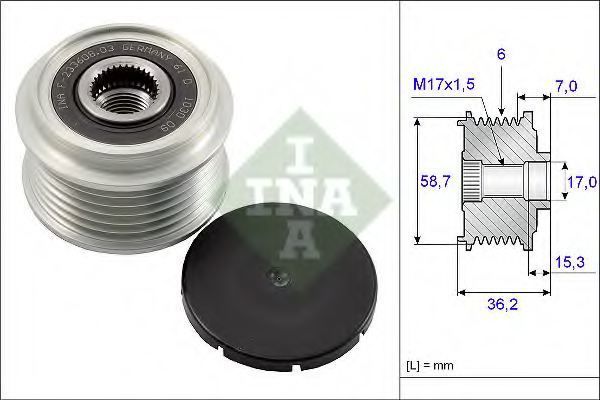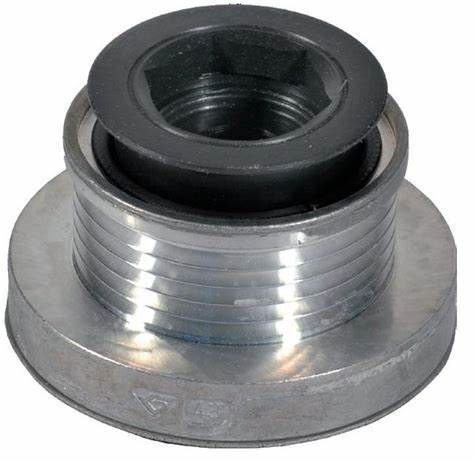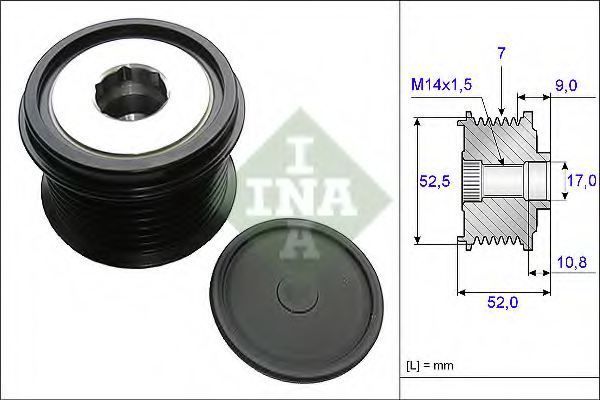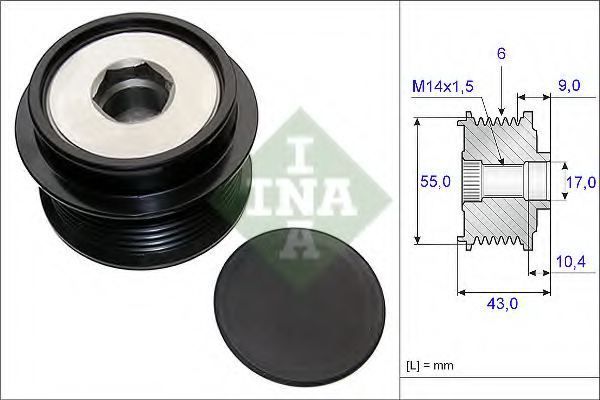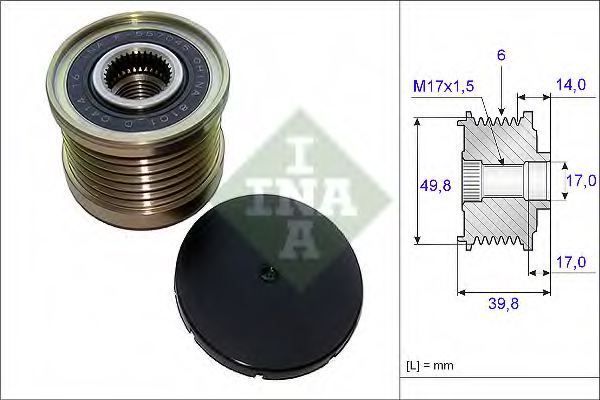

Article number: TO23003 FOCUSON ENGINE's product is cross-referenced with this one.
An alternator pulley connects the alternator to the engine via a belt and helps transfer mechanical energy from the engine to the alternator for electricity generation.
Tailored for wholesale and OEM needs, our VKM 06203 support OE number cross-reference. Please consult our sales team for MOQ and procurement details.
Details
|
Width [mm] 39,8 |
|
Number of ribs 6 |
|
Inner diameter [mm] 17 |
|
Outer diameter [mm] 50 |
OEM Numbers
Interchange Numbers
Vehicle Fitment
| Make | Model | Type | Engine Code | Capacity | Fuel Type | Year | Power |
|---|
| NISSAN | QASHQAI / QASHQAI +2 I (J10, NJ10, JJ10E) | 2.0 | MR20DE | 1997 CCM / 2.0 L | Petrol | 2007-02-01 2013-12-01 |
104 KW / 141 PS |
| NISSAN | QASHQAI / QASHQAI +2 I (J10, NJ10, JJ10E) | 2.0 All-wheel Drive | MR20DE | 1997 CCM / 2.0 L | Petrol | 2007-02-01 2013-12-01 |
104 KW / 141 PS |
| NISSAN | X-TRAIL II (T31) | 2.0 4x4 | MR20DE | 1997 CCM / 2.0 L | Petrol | 2007-06-01 2013-11-01 |
104 KW / 141 PS |
| NISSAN | TIIDA Saloon (SC11) | 1.8 | MR18DE | 1798 CCM / 1.8 L | Petrol | 2007-09-01 2012-12-01 |
93 KW / 126 PS |
| NISSAN | X-TRAIL II (T31) | 2.0 FWD | MR20DE | 1997 CCM / 2.0 L | Petrol | 2007-03-01 2013-11-01 |
104 KW / 141 PS |
| NISSAN | X-TRAIL II (T31) | 2.0 FWD | MR20DE | 1998 CCM / 2.0 L | Petrol | 2008-06-01 2013-11-01 |
103 KW / 140 PS |
| NISSAN | X-TRAIL II (T31) | 2.0 4x4 | MR20DE | 1998 CCM / 2.0 L | Petrol | 2008-06-01 2013-11-01 |
103 KW / 140 PS |
| NISSAN | X-TRAIL II (T31) | 2.0 4x4 | MR20DE | 1997 CCM / 2.0 L | Petrol | 2007-06-01 2013-11-01 |
101 KW / 137 PS |
| NISSAN | QASHQAI / QASHQAI +2 I (J10, NJ10, JJ10E) | 2.0 | MR20DE | 1997 CCM / 2.0 L | Petrol | 2007-02-01 2013-12-01 |
102 KW / 139 PS |
| NISSAN | QASHQAI / QASHQAI +2 I (J10, NJ10, JJ10E) | 2.0 All-wheel Drive | MR20DE | 1997 CCM / 2.0 L | Petrol | 2007-02-01 2013-12-01 |
102 KW / 139 PS |
| NISSAN | BLUEBIRD SYLPHY / SYLPHY III (B17) | 1.6 | MR16DDT | 1618 CCM / 1.6 L | Petrol | 2015-01-01 |
140 KW / 190 PS |
| NISSAN | QASHQAI / QASHQAI +2 I (J10, NJ10, JJ10E) | 2.0 All-wheel Drive | MR20DE | 1997 CCM / 2.0 L | Petrol | 2007-02-01 2013-11-01 |
101 KW / 137 PS |
| NISSAN | QASHQAI / QASHQAI +2 I (J10, NJ10, JJ10E) | 2.0 | MR20DE | 1997 CCM / 2.0 L | Petrol | 2010-01-01 2014-04-01 |
103 KW / 140 PS |
| NISSAN | QASHQAI / QASHQAI +2 I (J10, NJ10, JJ10E) | 2.0 All-wheel Drive | MR20DE | 1997 CCM / 2.0 L | Petrol | 2010-01-01 2014-04-01 |
103 KW / 140 PS |
Overview
| Car models | NISSAN QASHQAI / QASHQAI +2 I (J10, NJ10, JJ10E); NISSAN X-TRAIL II (T31); NISSAN TIIDA Saloon (SC11); NISSAN BLUEBIRD SYLPHY / SYLPHY III (B17) |
| Engines | MR20DE; MR18DE; MR16DDT |
| Engine power (horsepower) | 126-190 HP |
| Power (kilowatts) | 93-140 KW |
| Year of manufacture | 2007-2015 |
FAQs
The alternator pulley transmits rotational energy from the engine to the alternator, enabling it to generate electricity for charging the battery and powering electrical systems.
There are three main types: Fixed Alternator Pulley Overrunning Alternator Pulley (OAP) Decoupler Pulley
Common signs include unusual noises from the engine area, belt slippage, flickering lights, charging system warnings, or vibrations from the belt system.
An OAP is a type of alternator pulley with a one-way clutch mechanism. It allows the alternator to "freewheel" during engine deceleration, reducing stress on the belt and improving efficiency.
It’s possible if you have the right tools and experience. However, many alternator pulleys, especially OAPs, require specialized tools and expertise for proper installation.
A failing pulley can cause belt slippage, increased noise, reduced alternator efficiency, and eventually lead to battery discharge or damage to the belt system.
An alternator pulley typically lasts 80,000–150,000 km (50,000–90,000 miles), depending on driving conditions and maintenance.
Yes. A faulty pulley can cause excessive wear on the serpentine belt, tensioner, and potentially damage the alternator itself.
A fixed pulley rotates at a constant speed with the belt, while an OAP has a one-way clutch mechanism that allows the alternator to disengage during engine deceleration, reducing wear and vibration.
This could indicate a worn alternator pulley or bearing, belt misalignment, or tensioner issues.